

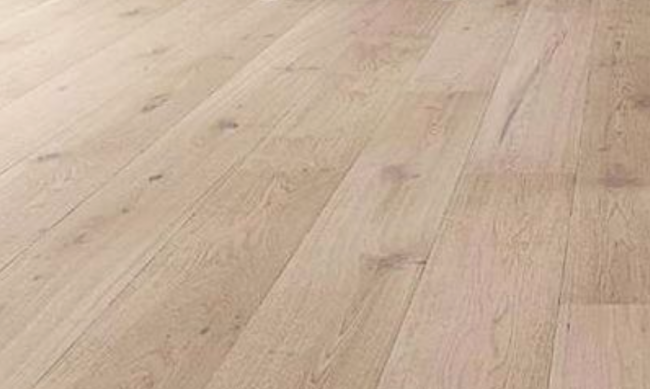
What is engineered floor
It's a composed 2-layer (or more) timber flooring with great parameters. It includes a glued combination of solid plywood core with a thin hardwood surface. All this makes the plank.
It combines the advantages of all-natural wood floor types and provides a unique, effective solution for every residential or commercial property.
Its main purpose is to be the most cost-efficient solution on the market. It's a result of modern technology using real wood and the power of composite solutions.
Briefly, it's authentic wood with additional layers to improve its quality and parameters. This is also known as hard surface flooring. It has different styles like oak, maple, and more.
Engineered wood floorboards
The floorboards look like solid wood. Very often, they are thin with a length up to 120 cm. The most popular size is 7/21 cm and 20/40 cm. However, the market offers many different alternative sizes like 10 to 15 cm.
The thickness is between 3 and 7 mm, up to 15 mm.
They all have a built-in structure for easier fitting, with absolutely no gaps possible between them.
The engineered floorboards are popular for:
- it's less vulnerable to damages;
- you can sand it (make a restoration);
- easy for daily maintenance;
- quicker reclaiming (if needed);
- better noise and heating insulation;
- they come finished, ready to install;
Each floorboard is a combination of:
- Plywood;
- Particleboard;
- Blockboard;
- Medium Density Fibreboard (MDF);
Floorboard types - depending on the fitting structure, we have 3 options:
- click-lock system;
- glueless -
- glued - apply strong adhesive to the joints.
Based on the used technology:
- Plywood;
- Densified wood;
- Fibreboard;
- Particleboard;
- Oriented strand board (OSB);
- Laminated timber;
- Laminated veneer;
- Cross-laminated;
- Parallel strand lumber (PSL);
- Finger joint;
- and many more;
By type of finish:
- Woodblocks;
- Overlay;
- Pre-Oiled;
- Board;
- Pre-Lacquered;
- Joblot;
By colour:
- Natural;
- Dark;
- Light;
Average engineered floor lifecycle
With a properly installed floor, you can expect to use the engineered flooring between 7 and 15 years without making any restorations and improvements.
That's one of its main strengths, and many people choose it exactly for this purpose. However, everything depends on the thickness and quality.
Also, you can do restoration (with some exceptions) about 1-3 times.
Engineered floor maintenance and repairs
Regular maintenance and cleaning are very easy due to the improved upper surface. However, there is a high risk of scratches from small particles or moving furniture. It would be best if you keep this in mind.
In most cases, it's like having a laminate, but it's real wood.
It's possible to fill gaps, reclaiming, sanding, and changing the finishing with more durable (but this requires a professional sander).
Engineered floor is good for certain premises
Since it's not waterproof, it's good to use it at premises with a lack of humidity like living rooms, bedrooms, staircases, etc. In some cases, it's good for hallways, but it depends. For kitchen and bathrooms, it's not a good choice.
It's suitable both for apartments and houses, but not so much for public spaces and offices if you're not using a premium product.
Engineered floor installation methods
This fitting process has two main options, using a floating method or glue-down. The floating process is much faster and requires less time and effort, but the glue method is more stable.
It depends on the purpose of this floor and how long you want to keep it in good condition.
If nailing is going to be used, then the subfloor has to be plywood or wood.
There is no need to wait for the wood to 'breathe' before installation. The entire process happens much quicker than regular solid wood.
However, the fitting requires professional machinery, tools, and previous experience, and it's not a good idea to do it yourself.
Engineered floor Cost-Efficiency
The main purpose of engineered wood is to provide the best cost-efficiency solution for real wood with great surface protection.
Its combination guarantees great quality and a good-looking floor in your property.